
Building a Year-Round ATV Setup for Rural Property Maintenance
An ATV or UTV becomes most useful when it is not treated as a seasonal toy, but as a year-round property machine. For rural homes, farms, forest plots, stables and larger gardens, the same vehicle can support work in winter, spring, summer and autumn.
The key is to build the setup around real tasks.
In winter, the main jobs are usually snow clearing, spreading sand or gravel, moving firewood and keeping access routes open. A snow plow is the obvious starting point, but winter use also benefits from good tyres, a reliable winch or lift system, underbody protection and proper lighting. If icy surfaces are common, a spreader can make the machine far more useful.
Spring brings different work. Yards and tracks may need repair after winter. Gravel areas may need levelling. Small plots may need soil preparation. This is where trailers, rear-mounted tools and forestry accessories become useful. A compact machine can move quickly between jobs without damaging soft ground as much as heavier equipment might.
Summer is often about maintenance. Grass, paddocks, riding arenas, forest paths, private roads and garden areas all need attention. The ATV becomes a maintenance platform rather than a machine for one specific job.
Autumn is the season of collection and preparation. Leaves, branches, firewood, soil, tools and building materials all need moving. A trailer is usually one of the most used accessories at this time of year. For forest owners, autumn may also mean preparing firewood or clearing paths before snow.
A good year-round setup usually starts with protection. Skid plates, front protection and suitable storage accessories help keep the machine in working condition. When the ATV is used in all seasons, it will meet stones, mud, snow, branches, tools and loads. Protecting it early is often cheaper than repairing it later.
The second step is transport. A trailer, basket, rack or cargo box increases the usefulness of the machine immediately. Many property jobs are simply about moving something from one place to another.
The third step is task-specific equipment. This is where the setup becomes personal. A horse property may need an arena leveler. A forest plot may need a timber trailer or chainsaw holder. A farm may need bale transport or a receiver mount system. There is no universal setup because properties differ.
It is better to build gradually than to buy everything at once. Start with the jobs that happen most often. Then add equipment when a repeated problem becomes clear. This keeps the setup practical and avoids accessories that look useful but are rarely used.
Storage and maintenance should also be considered. Tools that are easy to attach, remove, clean and store will be used more often. Equipment that is awkward tends to stay in the corner.
A year-round ATV setup is not about having the most accessories. It is about making the machine useful in every season. When chosen well, the equipment turns an ATV or UTV into a compact, flexible working machine that earns its place on the property throughout the year.
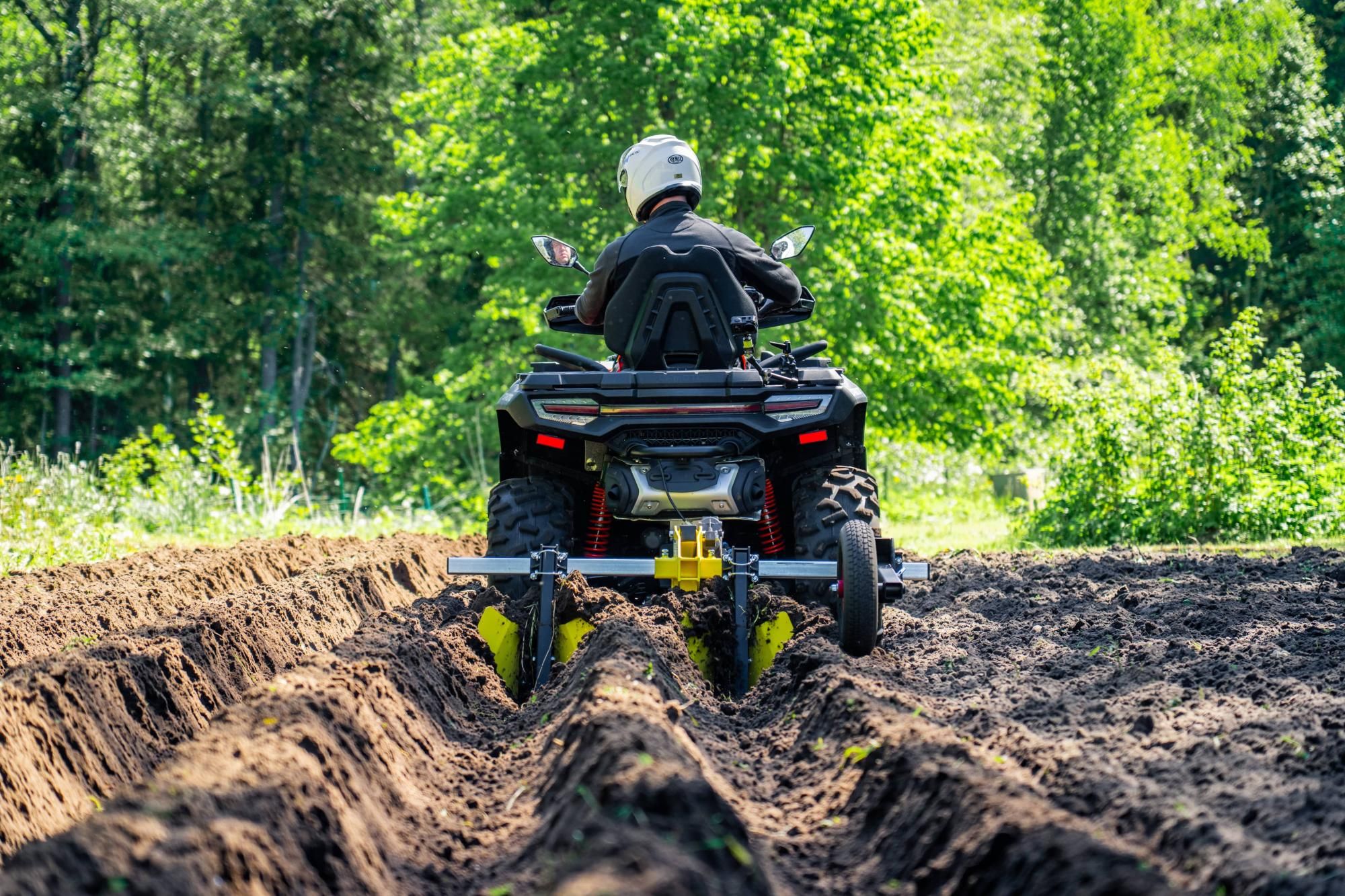
Why Small Farms Still Need Small Machines
Modern agriculture often brings to mind large tractors, wide implements and fields measured in hundreds of hectares. That equipment has its place. But not every farm, stable, rural property or landowner works on that scale.
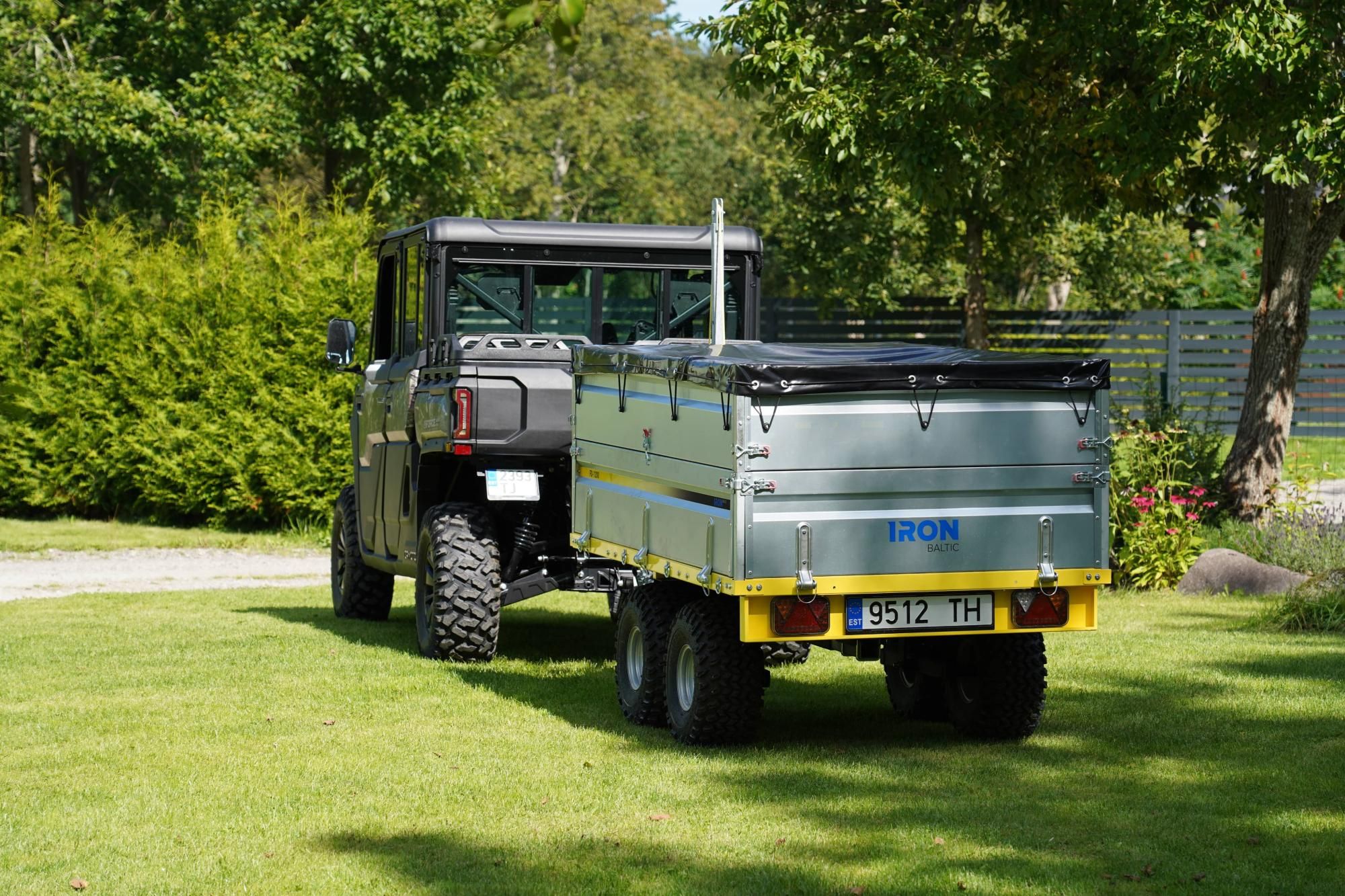
ATV Trailers: What Load Capacity Does Not Tell You
When comparing ATV and UTV trailers, load capacity is usually the first number people look at. It is easy to understand and easy to compare. A 500 kg trailer sounds smaller than a 1200 kg trailer, so the choice may seem simple.
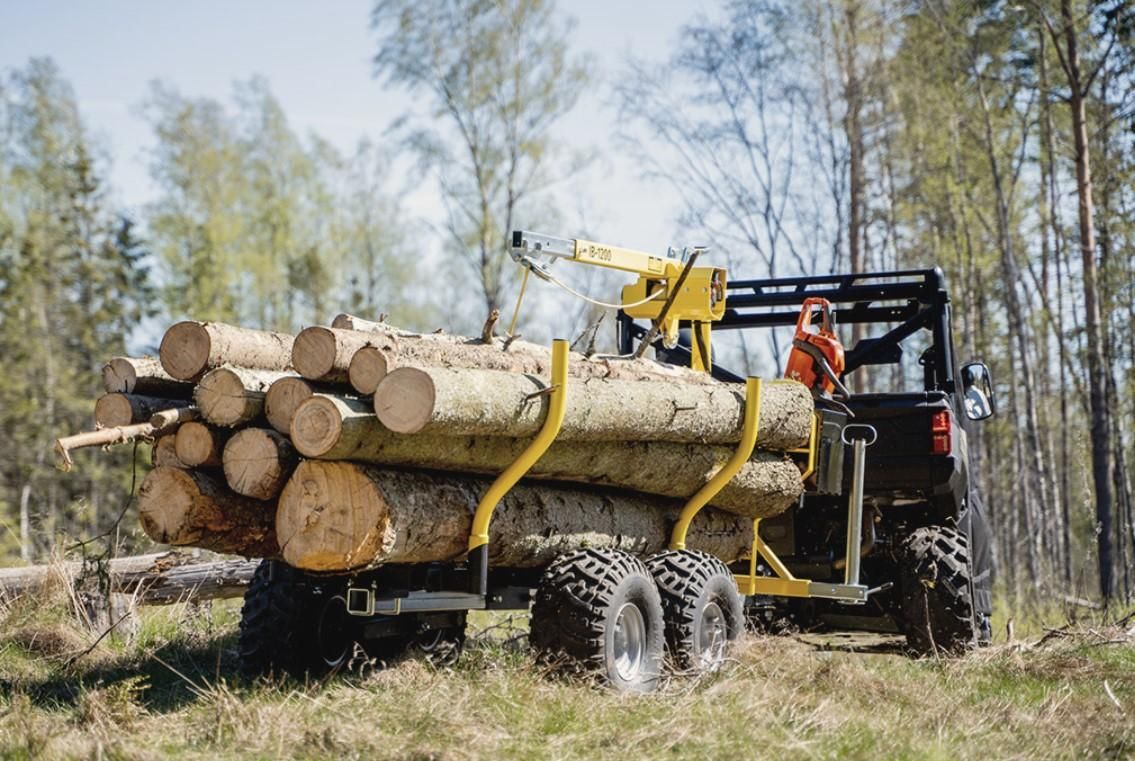
Working in the Forest With an ATV: What to Consider Before Adding Equipment
An ATV can be a very useful forestry machine, especially on private land, small woodlots and narrow forest tracks where larger machinery is not practical. It can move tools, pull a timber trailer, transport firewood, help clear paths and support maintenance work in places where access is limited.